
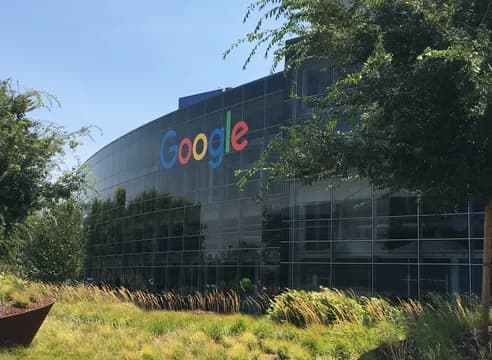
The tech giant Google is undergoing a pivotal reorganization within its artificial intelligence division, marking a new chapter in its pursuit of AI dominance. This internal realignment comes as the race for AI innovation intensifies, prompting strategic shifts at the highest levels of the company’s research and development efforts. The moves reflect a broader industry trend where established players are adapting to agile, well-funded startups and the rapid pace of technological advancement.
What major leadership shifts are impacting Google’s AI division?
Google’s AI leadership is experiencing a significant shake-up, most notably with the departure of Jeff Dean, a 27-year veteran and the company’s 30th employee, who is leaving to launch a new venture. This reorganization, announced on August 5, 2026, also sees Demis Hassabis, CEO of Google DeepMind, moving into a chairman role, with operational leadership transitioning to Koray Kavukcuoglu. These changes underscore Google’s strategic response to the rapidly evolving AI landscape, as reported by CNBC and Bloomberg, aiming to sharpen its focus and accelerate development in critical areas.
Why is Jeff Dean leaving Google after nearly three decades?
Jeff Dean, a pivotal figure in Google’s AI development for 27 years, is departing the company to co-found a new public benefit corporation named Discovery Loop. Dean, who was Google’s 30th employee, is joined by three other prominent researchers, Sanjay Ghemawat, Quoc Le, and Oriol Vinyals, in this new endeavor, as detailed by The Wall Street Journal and The New York Times. Discovery Loop aims to leverage AI for scientific and engineering breakthroughs, focusing on automating thousands of experiments in fields such as drug discovery, hardware design, and clean energy. This move highlights a growing trend of top AI talent seeking to apply their expertise in more focused, startup environments, potentially driven by the desire for greater autonomy and direct impact on specific scientific challenges.
How is Google DeepMind’s leadership structure evolving?
Google DeepMind is seeing a strategic shift in its top management, with Demis Hassabis transitioning from his CEO role to become chairman of Google DeepMind. This move, reported by The Business Times and Bloomberg, places Koray Kavukcuoglu in the operational lead role, where he will serve as senior vice-president and report directly to Alphabet CEO Sundar Pichai. Hassabis’s new position as chairman of the lab and chief scientist of Alphabet suggests a broader strategic oversight, allowing him to focus on long-term vision and scientific direction across the company’s AI initiatives. Meanwhile, Kavukcuoglu’s promotion to head the AI division is expected to bring a renewed operational focus to DeepMind’s day-to-day research and development efforts, ensuring efficient execution of Google’s ambitious AI roadmap.
What competitive pressures are driving Google’s AI reorganization?
The leadership changes at Google’s AI division are largely a direct response to the escalating competition from rapidly growing AI firms such as OpenAI and Anthropic. CNBC explicitly frames these moves within the context of Google’s need to compete more aggressively in frontier AI development. These newer entrants have demonstrated remarkable agility and innovation, often challenging the established dominance of tech giants. By restructuring its AI leadership, Google aims to foster greater agility, streamline decision-making, and accelerate its own groundbreaking research to ensure it remains a frontrunner in the global race for artificial intelligence supremacy. This strategic realignment is a clear indication that the company is taking the threat from well-funded and fast-moving competitors seriously.
For founders and tech leads navigating the AI space, Google’s recent leadership reshuffle highlights the intense competitive dynamics and the imperative for continuous innovation. This signals that even established tech giants are adapting their structures to foster agility and retain top talent. Businesses should consider how their own AI strategies can embrace similar flexibility, potentially by empowering internal research teams with greater autonomy, fostering a culture of rapid experimentation, or exploring strategic partnerships to accelerate development. In a market where talent mobility and rapid iteration are becoming key differentiators, understanding these shifts can inform decisions on team structure, investment in R&D, and competitive positioning.